
Retreat Centers were built for these times
It is hard to comprehend what we are living through.
On one hand, the world is still moving. People are going to work, having meetings, picking up groceries, imagining better futures. Children are doing homework. Coffee is being poured. Email is being answered.
On the other hand, people are being executed on the streets by armed government agents. A nurse coming home from his shift. A mother in her car. Tens of thousands marching in subzero temperatures while the violence continues. Two of the three homicides in Minneapolis this year were committed by federal agents, not criminals.
Maybe it is not hard to comprehend what we are living through.
The playbook is always the same. 1920s Italy. 1930s Germany. 1930s Russia. 1930s Japan. 1960s China. 2000s Russia (again). 2025 America. Degrade civil society. Turn people against each other. Find internal and external enemies. Demonize the media. Develop a cult of personality. Allow paramilitary forces to act with impunity. The rich get richer. The ugliest impulses of humanity unchecked and whipped into a frenzy.
We have seen this many times before.
And not only in the history of other nations. The control and killing of Black and brown bodies is not new to America - it is foundational. Slavery. Jim Crow. Lynching as public spectacle. Mass incarceration. For many communities, the masked agents in the streets are not a rupture but a continuation.
What feels like shock to white North Americans like me is a privilege finally cracking open. The violence was always here. Right here.
Do not disappear
In times like these, the greatest danger is not despair - it is disappearance. The slow retreat into comfort, into routine, into the numbing scroll of the screen. Timothy Snyder calls it the gift authoritarians count on: "Power wants your body softening in your chair and your emotions dissipating on the screen."
The playbook works because people withdraw. They obey in advance. They assume someone else will defend the institutions, stand out, show up.
But the good in humanity persists precisely when people refuse to disappear.
We see it now: neighbours forming human chains to protect each other, congregations singing together, strangers offering shelter. These are not small things. They are acts of corporeal politics - bodies in unfamiliar places with unfamiliar people, choosing presence over passivity.
The resistance to tyranny has always been the same: stay connected, stay visible, stay engaged.
The power of place
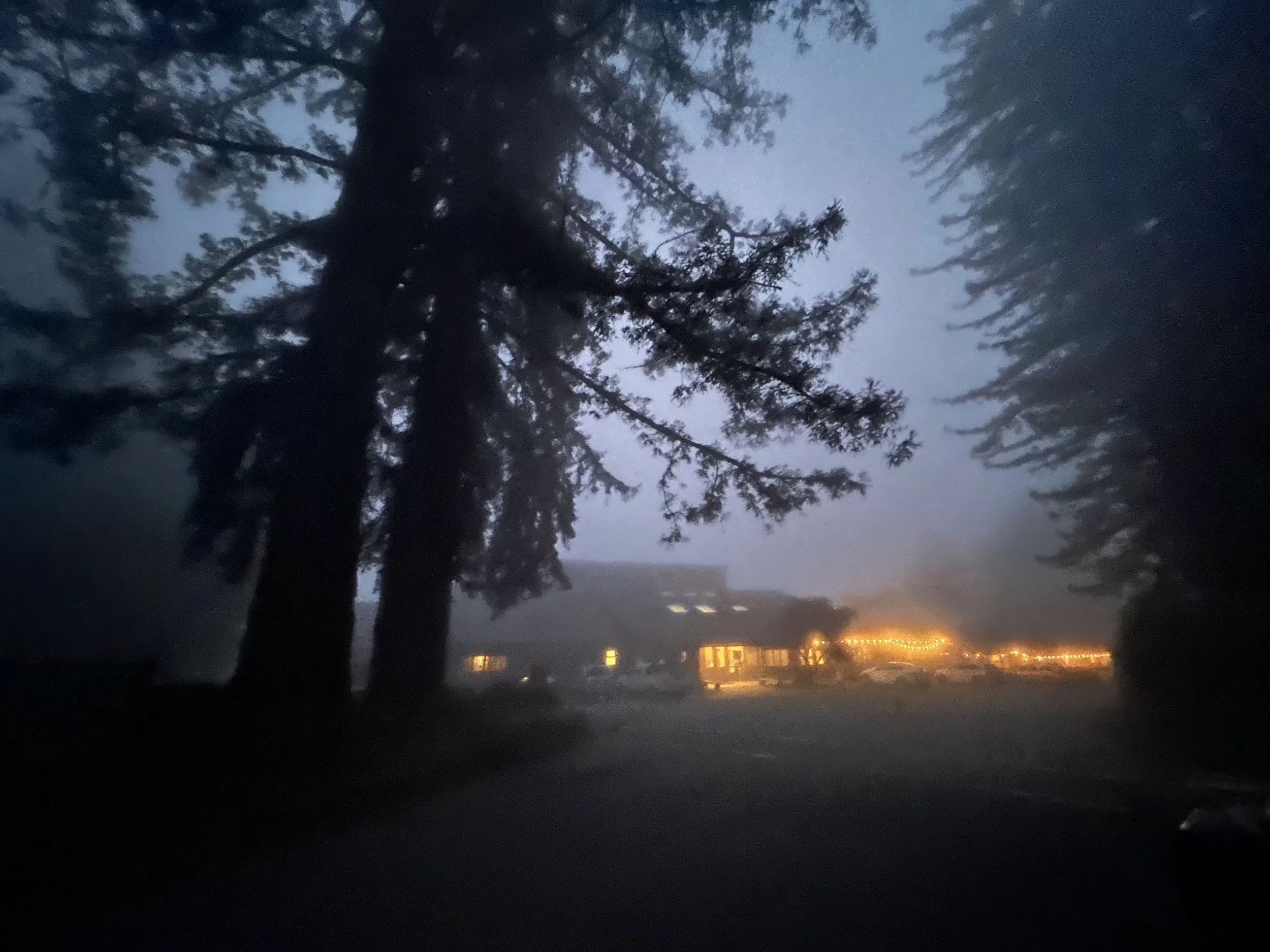
I was at Mount Madonna (an RCC member center) when Renee Good was killed in Minnesota.
I watched as people supported each other at meals and in passing on the trails. Hushed conversations at dinner. Tears for America shed not alone, but held in community. People trying to understand together how their country had taken such a violent turn. Disbelief, anger, sadness all held together.
I felt honoured to be there. I felt safe being there. I felt held.
Retreat centers were built for times like these
In moments of disruption, collective grief and confusion, we need places set apart - not to escape, but to prepare. To grieve together so we can act together. To remember who we are before we go back out and engage in the world.
What we are missing is each other.
Our economic system yields a culture of atomized individuals and isolated nuclear families. Our devices pull us away from the flesh and blood of real connection. And authoritarians count on this. They count on our separation. They count on our screens. They are funded by the very same people who profit from our screens. They count on us receding into private life while they remake the public one.
Our work now
For those who lead and steward retreat centers: this is not the time to withdraw to the cave or meditate in some academic realm about the state of the world.
Retreat centers must be nodes of light - proselytizing love, hope, connection, interdependence, and justice, in word and in deed. Not safe harbors where the weary hide from the storm, but places that send people back into the world more whole, more courageous, more connected to each other.
The temptation in dark times is to turn inward, to protect what we have, to wait it out. To bypass. To abdicate.
But that is the disappearance the authoritarians count on.
Our work now is to engage - to be in the world, not apart from it. To model the communities we want to see. To gather people. To help them turn toward each other. To practice the togetherness that will carry us through the tragic that is already here, and the tragic that is still to come.
It's not very easy to be human. It is much better to do it together.
Here are a few ways I have seen retreat centers in our network respond to these times. I hope you find inspiration from them:
Reach out to your greater community to hold space on living through these times - a place for people to share their grief, anger, care, and hopes.
Make your space available to community groups who want to organize or need reprieve.
Pay greater attention to your relationships - Gibran Rivera in his excellent Substack piece on Escalating Violence said: “Go deeper. Much, much deeper. With the folks you already know.“
Check in with your teams and the people you work with.
Be as courageous as you can with the resources you have.
Resources and Inspiration:
https://substack.com/@jemartisby
Equal Justice Initiative Legacy Sites
In the Face of Escalating Violence - Girban Rivera
On Tyranny - Timothy Snyder
ICE Protest Song for Minneapolis
Streets of Minneapolis - Bruce Springsteen
Waging Non-Violence
The Wheel of Reality-Bending Phrases
How to Survive the End of the World
The Pause - Krista Tippett
