The Retreat Lifecycle: Rather than talking about workflow, you walk it
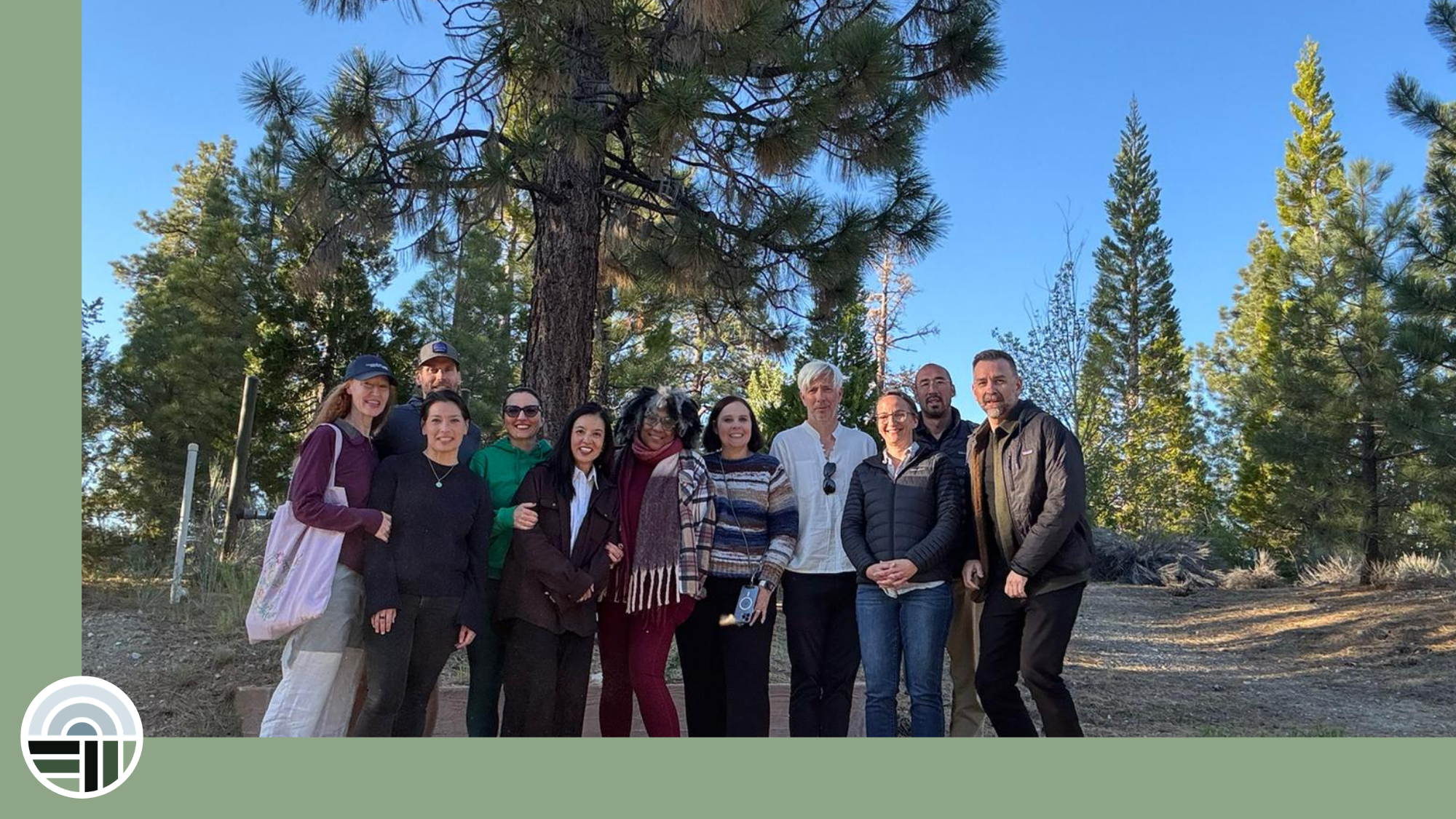
From RCC's September 14, 2026 Community Roundtable, facilitated by Ling Lo
Most retreat center staff know their own piece of the work well. Far fewer know what their colleagues are doing one year, one week or one hour before guests arrive. That gap was the starting point for this season's first RCC Community Roundtable. Ling Lo, a retreat center advisor - formerly head of programs at Hollyhock, Kripalu and currently at Big Bear Retreat Center and La Casa de Maria - presented an idea she's been testing and asked the community a question: is this worth rolling out to retreat center leaders more broadly?
Where the idea came from
Ling was brought in to support a new general manager at a retreat center in Big Bear, California. She quickly noticed that the team was deeply dedicated, but programs and operations staff didn't fully understand what each other did. She designed a day-and-a-half training for the 25-person team, and co-facilitated with Tatyana Sanikovich, who has led HR at the center for several years. All full- and part-time staff walked through the complete lifecycle of a retreat together.
How it works
The room was set up with seven stations, each representing a phase of the retreat journey:
Advanced planning (6–12 months out)
Registration and marketing
Pre-arrival (1–2 months out)
Pre-arrival (one week out)
The day before and arrival day
During the retreat
Post-retreat integration
Each station had a scrambled stack of task slips. Mixed teams had to put them in order: housekeeping working with kitchen, facilities working with marketing. People who had never thought about contract negotiations suddenly had to figure out where they belonged in the sequence. The team got so into it that they ‘gameified' the process and started asking for timers, points and prizes.
The activity was bookended with two leadership frameworks:
The DARCI grid to clarify who decides, is responsible, accountable, consulted and informed for each task.
The Eisenhower Matrix (urgent vs. important) to help operations and programs staff understand each other. An ops person dealing with a power outage and late arrivals is living in "urgent and important." A program planner asking about fire pit usage for a retreat in January is in "important, not yet urgent." Both tasks are important. Only the time-sensitivity is different. This builds empathy and understanding across teams.
“Passing the Bear”
The next morning, the entire team walked back through every task and passed a large stuffed bear (this was Big Bear, after all) to whoever was responsible for that step. This is where things got interesting. Sometimes the bear was dropped because nobody owned the task. Sometimes everyone reached for it, revealing duplicated effort. Tatyana described the arrival-day moment when the bear hit the floor between programs and operations as the clearest picture of where things go sideways.
The activity also let every person see and be seen. At the closing reflection, one of the cooks said he'd had no idea the programs team was thinking about the retreat he was cooking for, a whole year in advance.
What changed afterward
The team kept a running "parking lot" of issues that came up during the session. One of the biggest was enrollment. The center had been closing registration two weeks before each retreat so the kitchen and housekeeping had final numbers. But open-registration retreats see a spike in bookings in those last two weeks, so a lot of registrations were being left on the table. The compromise: online registration now closes seven days out, and guests can still book by phone in that final week.
The session also surfaced the need for "hub" roles: people who sit on the programs team and connect to operations, carrying information like a teacher's preferred room setup to production staff. Both departments now use Asana to organize their workflows, and there’s room for further integration between staff teams.
What the community added
Participants made the discussion richer with their own experience:
It could extend to emergencies. One leader described a recent facilities incident and an uncoordinated response. That prompted the idea of a "lifecycle of a crisis" and a toolkit version for larger events.
An outside voice helps. People often listen more readily to an experienced outside facilitator than to their own ED or colleagues.
Pair it with self-awareness tools. Peter suggested opening with the Enneagram or a similar framework so people understand how they show up, not just what they do.
It builds knowledge in the body. A new lodge director in Colorado, finishing his first season, noted that manuals and job descriptions don't get knowledge into your body. Physically walking the lifecycle does, especially for seasonal teams that start fresh each year.
It's an onboarding tool. Ling has since run a mini version for new hires in hub roles and imagines a one-page graphic of the seven stations for employee handbooks.
It works for rentals too. Whether a center runs its own programs or hosts outside groups, if someone plans the gathering and someone produces it, the model applies.
The open question
Is there a need? The room's answer was a clear yes. The remaining questions: should Ling and Tatyana take this on the road, or train retreat center leaders to run it with their own teams? What could be standardized and what could stay customizable? And could community foundations or other funders support it as capacity-building and leadership development?
Contact Ling if you’re curious about bringing The Retreat Lifecycle training to your center: callmelinglo@gmail.com
